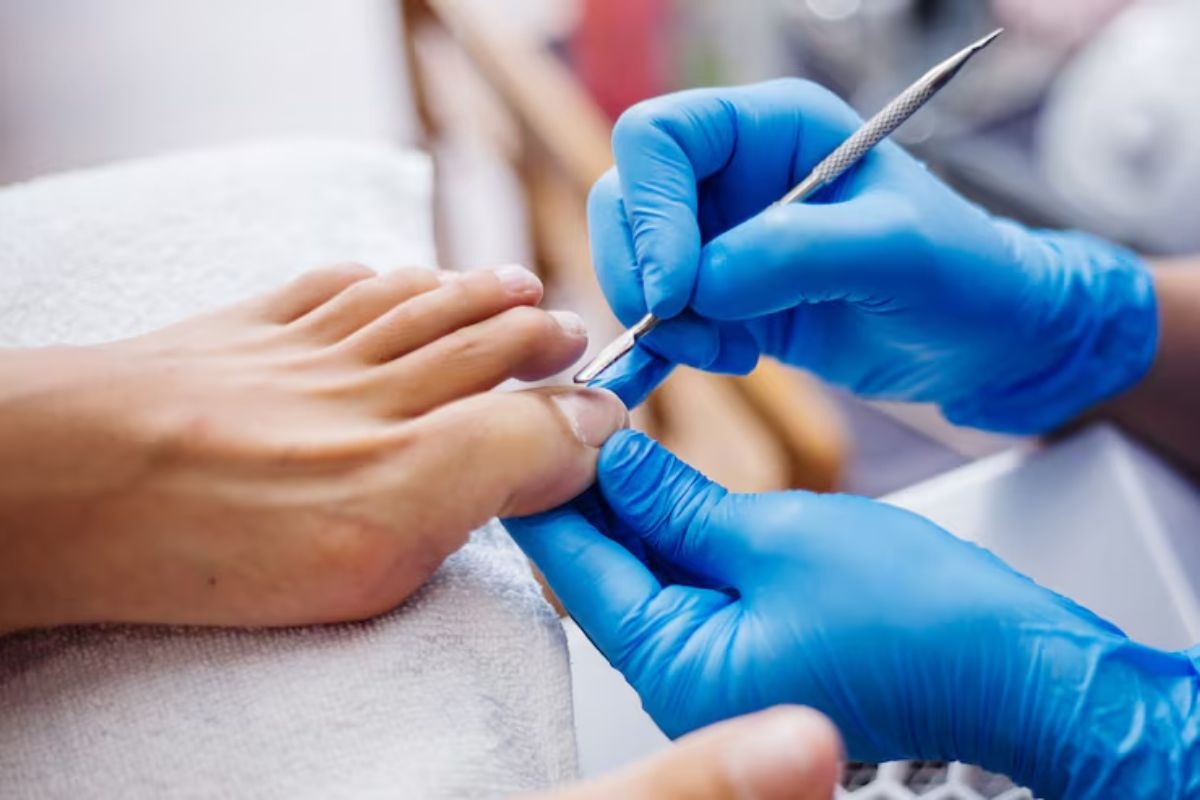
An ingrown toenail happens when the edge of a toenail grows into the skin around it. This can cause pain, redness, and swelling, especially when walking or wearing shoes. It mostly affects the big toe but can happen to any toe. Ingrown toenail causes include cutting nails too short, wearing tight shoes, hurting the nail, or having curved nails. Mild cases may improve with simple nail care, while more severe cases or infections may require treatment from a healthcare professional.
If discomfort develops around the nail, early care can help prevent further irritation. Ingrown toenails can be assessed by a foot care professional, who can determine how deeply the nail has grown into the skin and recommend appropriate treatment. Knowing the early signs can also help prevent a small problem from becoming more painful.
What Causes an Ingrown Toenail?
An ingrown toenail usually develops when the nail edge presses into the nearby skin as it grows. Several habits and foot conditions can increase the risk:
- Cutting nails too short: Trimming nails too close to the skin may cause the edge to grow inward.
- Rounding the nail corners: Curving the corners instead of cutting straight across can encourage the nail to grow into the skin.
- Wearing tight shoes: Narrow shoes and socks can press the toes together and push the nail edge into the skin.
- Toe injuries: Stubbing the toe or repeated pressure during sports may affect nail growth.
- Naturally curved nails: Some people have nail shapes that make ingrown edges more likely.
- Repeated pressure: Activities that place regular pressure on the toes may increase irritation around the nail.
What Are the Early Symptoms of an Ingrown Toenail?
Early symptoms often appear along one side of the nail. The affected skin may become sore before more noticeable swelling or infection develops.
Watch for these signs:
- Pain or tenderness when touching the side of the nail.
- Redness around one nail edge.
- Mild swelling beside the nail.
- Discomfort when wearing closed shoes.
- Skin that feels sore when walking or pressing on the toe.
As the problem progresses, the area may become more swollen and painful. Pus, bleeding, or fluid coming from the nail edge may indicate infection and should be checked promptly.
How Is an Ingrown Toenail Treated?
Treatment depends on how far the nail has grown into the skin and whether there is an infection.
For mild cases, simple care may help:
- Soak your foot in warm water for 10–20 minutes to soften the skin around the nail.
- Dry the foot carefully after soaking.
- Wear open or roomy footwear to reduce pressure on the toe.
- Avoid cutting into the nail corner or picking at the skin.
- Keep the area clean and watch for any increase in redness or swelling.
Do not try to dig out the nail or remove an embedded corner at home. This can damage the skin and increase the risk of infection.
When Is Professional Treatment Needed?
Arrange an assessment if the pain continues, the toe becomes increasingly swollen, or pus appears. A podiatrist in East Mesa can examine the nail, check for infection, and decide whether a simple treatment or a minor procedure is needed.
Possible treatments include:
- Removing the nail edge: The part of the nail growing into the skin may be gently lifted or removed.
- Removing part of the nail: If the nail has grown deeply into the skin or the problem keeps recurring, the affected part of the nail may be removed. The area is numbed first to prevent pain.
- Nail growth treatment: In some recurring cases, a treatment may be used on the nail root to reduce the chance of that edge growing back.
- Infection care: Antibiotics may be prescribed if a spreading skin infection is present. They are not needed for every ingrown toenail.
People with diabetes, poor blood flow, or reduced feeling in their feet should seek professional advice early rather than trying home treatment.
How Can Ingrown Toenails Be Prevented?
A few everyday habits can lower the risk of another ingrown nail:
- Cut toenails straight across and avoid trimming them too short.
- Do not dig into the corners of the nails.
- Choose shoes with enough room for the toes.
- Keep feet clean and dry.
- Avoid picking or tearing nail edges.
- Check the toes regularly for soreness, redness, or swelling.
If nail problems keep returning, a podiatrist near you can assess the nail shape and discuss ways to reduce repeated pressure on the nail.
Get Help for Painful or Ingrown Toenails!
An ingrown toenail can make walking and wearing shoes painful. Getting it checked early can help prevent the problem from getting worse. Chambers Foot & Ankle can check your toe, explain the treatment options, and help you get the right care. Book an appointment to have your toe checked and make walking more comfortable again.
FAQs:
Can an ingrown toenail heal on its own?
A mild ingrown toenail may improve with proper nail care and reduced pressure on the toe. However, if the pain or swelling gets worse or you notice signs of infection, see a healthcare professional.
Should you remove an ingrown toenail at home?
No. Cutting the nail or digging into the skin can cause cuts, bleeding, and infection. Keep the area clean and see a healthcare professional if your toe hurts or the nail has grown deep into the skin.
Does an ingrown toenail always become infected?
No. An ingrown nail can cause pain and swelling without an infection. Pus, spreading redness, warmth, or worsening pain may indicate infection and should be checked.
How long does an ingrown toenail take to heal?
Healing time depends on how serious the problem is and what treatment you receive. Mild cases may get better within a few days, while healing after removing part of the nail may take longer. Follow the care instructions given by your healthcare professional.